Identify the signs of Obstructive Sleep Apnea (OSA)
Excessive daytime sleepiness (EDS) unexplained by other factors along with loud disruptive snoring or nocturnal choking/ gasping/ snorting or nocturnal pauses in breathing
Signs and Symptoms of OSA
Recurrent nocturnal awakenings
Un-refreshing sleep
Daytime fatigue
Impaired concentration/memory loss
Mood/behavioral changes
Morning headaches
Loss of sexual interest
ASSESS Yourself
Do you snore?
Have you been told quit breathing or pause your breathing during sleep?
Do you awake from sleep choking, snorting or gasping for breath? (Take into consideration Hypertension, Body Mass Index)
If needed, ask about other physical characteristics, signs and symptoms
Methods for Screening Obstructive Sleep Apnea
The Berlin Questionnaire
The Berlin Questionnaire uses 10 questions to assess:
(1) Presence & frequency of snoring behavior
(2) Wake-time sleepiness or fatigue
(3) History of hypertension (high Blood Pressure) &/or obesity
The persistence or frequent symptoms in 2 of 3 categories indicates a high likelihood of OSA
If you would like to assess yourself, please take the questionnaire below.
STOP-BANG Questionnaire
The STOP–BANG questionnaire is one of the most widely accepted screening tools for Obstructive Sleep Apnea OSA.
The STOP-BANG questionnaire screens for Obstructive Sleep Apnea (OSA) only, not Central Sleep Apnea.
If you would like to assess yourself, please take the questionnaire below.
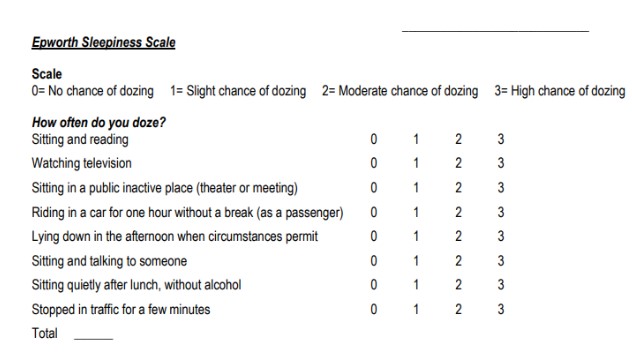
Epworth Sleepiness Scale
8 questions answered on a scale of 0-3 ( 0= would never doze, 3= high chance of dozing)
Score > 10 represents daytime sleepiness
Epworth Sleepiness Scale does not identify cause of sleepiness, but it may include sleep apnea, and also insomnia, lack of time to sleep, etc. Patients with sleep apnea may have normal value scored.